

Understanding Seedy Quinoa Breakfast Cookies
We understand the challenge of finding breakfast options that genuinely nourish without sacrificing convenience or taste.
Our seedy quinoa breakfast cookies represent a transformative approach to morning nutrition, combining ancient grains with modern nutritional science to create a grab-and-go breakfast that delivers sustained energy throughout your busiest mornings.
These wholesome cookies feature cooked quinoa as their foundation, complemented by an impressive array of nutrient-dense seeds including pumpkin seeds, hemp seeds, and chia seeds.
Unlike traditional breakfast cookies that rely on refined flours and excessive sugars, our recipe harnesses the natural binding properties of tahini and the subtle sweetness of pure maple syrup. Each cookie provides approximately five grams of plant-based protein, making them an exceptional choice for anyone seeking balanced nutrition in portable form.
The beauty of Seedy Quinoa Breakfast Cookies recipe lies in its simplicity and adaptability. We’ve designed the preparation method to require just one mixing bowl and approximately 25 minutes from start to finish, making it perfectly suited for meal prep sessions or spontaneous baking when you need healthy options quickly.
Table of Contents
Seedy Quinoa Breakfast Cookies

Discover our protein-rich seedy quinoa breakfast cookies recipe with tahini, oats, and superfood seeds. Ready in 25 minutes, these vegan, gluten-free cookies deliver 5g protein per serving.
- Prep Time: 10 munites
- Cook Time: 15 munites
- Total Time: 25 munites
- Yield: 12 cookies 1x
- Category: Breakfast, Snack
- Cuisine: American
- Diet: Gluten Free
Ingredients
- ⅔ cup (124g) cooked quinoa, cooled
- 1¼ cups rolled oats (certified gluten-free if needed)
- ¼ cup raw pumpkin seeds
- ¼ cup hemp hearts
- ¼ cup chia seeds
- ⅓ cup tahini, well-stirred
- 6 tablespoons pure maple syrup
- ¾ teaspoon baking soda
- ½ teaspoon fine sea salt
- ¼ cup dairy-free dark chocolate chips (optional)
Instructions
- Preheat oven to 350°F (176°C). Line a baking sheet with parchment paper.
- If preparing quinoa fresh, rinse ¼ cup dry quinoa and cook with ½ cup water according to package directions. Cool completely before using.
- In a medium bowl, combine cooled quinoa, rolled oats, pumpkin seeds, hemp seeds, and chia seeds. Stir thoroughly.
- Add tahini, maple syrup, baking soda, and salt to the bowl. Include chocolate chips if using.
- Stir vigorously with a wooden spoon until all ingredients are fully incorporated and mixture becomes cohesive.
- Using a cookie scoop or tablespoon, portion dough into 1½-tablespoon balls and place on prepared baking sheet, spacing 2 inches apart.
- Flatten each ball with your palm to approximately ½-inch thickness.
- Bake for 14-18 minutes, rotating pan halfway through, until edges are golden brown.
- Cool on baking sheet for 5 minutes, then transfer to a wire rack to cool completely.
- Store in an airtight container at room temperature for up to 5 days, refrigerate for up to 2 weeks, or freeze for up to 3 months.
Nutrition
- Serving Size: per serving
- Calories: 165
- Sugar: 6g
- Sodium: 140mg
- Fat: 8g
- Saturated Fat: 1g
- Carbohydrates: 18g
- Fiber: 4g
- Protein: 5g
Essential Ingredients for Perfect Seedy Quinoa Breakfast Cookies
Ingredients
The foundation of our seedy quinoa breakfast cookies begins with properly prepared quinoa.
- ⅔ cup (124g) cooked quinoa, cooled
- 1¼ cups rolled oats (certified gluten-free if needed)
- ¼ cup raw pumpkin seeds
- ¼ cup hemp hearts
- ¼ cup chia seeds
- ⅓ cup tahini, well-stirred
- 6 tablespoons pure maple syrup
- ¾ teaspoon baking soda
- ½ teaspoon fine sea salt
- ¼ cup dairy-free dark chocolate chips (optional)
The Superfood Seed Blend
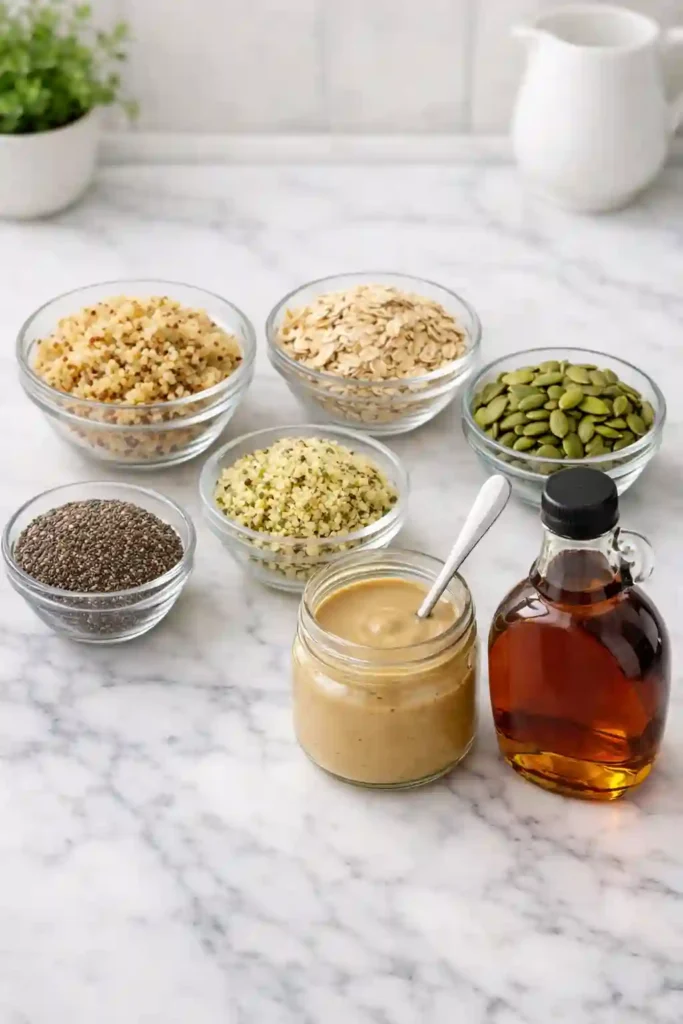
Our signature seed combination delivers exceptional nutritional value and textural interest. We incorporate one-quarter cup each of raw pumpkin seeds, hemp hearts, and chia seeds. The pumpkin seeds provide satisfying crunch along with zinc, magnesium, and healthy fats.
Hemp seeds contribute complete protein and omega-3 fatty acids with their subtle, nutty flavor. Chia seeds act as a natural binding agent while delivering impressive amounts of fiber, calcium, and antioxidants.
Binding and Sweetening Elements
Tahini serves as our primary fat source and binding agent, replacing traditional butter or oil. We use one-third cup of well-stirred tahini, ensuring the natural oils are fully incorporated before measuring.
The tahini contributes rich, sesame flavor while providing additional protein, calcium, and healthy fats. If tahini isn’t available or preferred, natural almond butter or sunflower seed butter work as alternatives, though they will subtly alter the flavor profile.
Pure maple syrup provides natural sweetness with its characteristic depth and complexity. We use one-quarter cup plus two tablespoons, which delivers balanced sweetness without overwhelming the cookies’ nutty, wholesome character. Honey can substitute for non-vegan preparations, while coconut nectar or agave syrup offer alternative natural sweeteners for those avoiding maple syrup.
Leavening and Flavor Enhancement
Baking soda serves as our sole leavening agent, with three-quarters teaspoon providing just enough lift to create tender cookies without excessive spread. The baking soda also interacts with the natural acidity in the tahini and maple syrup, contributing to optimal texture development.
We include one-half teaspoon of fine sea salt to enhance all other flavors while balancing the sweetness, though this can be reduced to one-quarter teaspoon if you prefer less sodium.
Optional dark chocolate chips add indulgent appeal for those who appreciate extra sweetness. We suggest one-quarter cup of dairy-free chocolate chips, which melts slightly during baking to create delightful pockets of richness throughout the cookies. This addition transforms the cookies from virtuous breakfast item to treat-like snack while maintaining their nutritional foundation.
Step-by-Step Preparation Method For Seedy Quinoa Breakfast Cookies
Preparing the Quinoa Foundation
Preparing a Seedy Quinoa Breakfast Cookies recipe Begin by preparing your quinoa if you don’t have cooked quinoa readily available. Rinse one-quarter cup of dry quinoa thoroughly under cold water using a fine-mesh strainer, removing any residual saponins that can impart bitterness.
Combine the rinsed quinoa with one-half cup of water in a small saucepan, bringing the mixture to a rolling boil over high heat. Once boiling, reduce the heat to low, cover the pan tightly, and simmer for approximately 15 minutes until the quinoa has absorbed all water and appears fluffy with visible spiraled germs.
Remove the quinoa from heat and let it stand covered for five minutes, then fluff with a fork and spread onto a plate or shallow dish to cool completely. This cooling step is absolutely critical, as incorporating warm quinoa creates a wet, unmanageable dough that produces dense, gummy cookies.
We recommend preparing quinoa ahead of time, storing it refrigerated in an airtight container for up to five days, ensuring you always have cooled quinoa ready for spontaneous cookie baking.
Creating the Cookie Dough
Preheat your oven to 350 degrees Fahrenheit and position a rack in the center position for even heat distribution. Line a large baking sheet with parchment paper, avoiding greasing as the tahini provides sufficient fat to prevent sticking.
In a medium mixing bowl, combine your cooled quinoa with the rolled oats, pumpkin seeds, hemp seeds, and chia seeds, stirring thoroughly to distribute the seeds evenly throughout the grain mixture.
Add the tahini, maple syrup, baking soda, and salt to the bowl, along with chocolate chips if using. Using a sturdy wooden spoon or silicone spatula, stir the mixture vigorously until all ingredients are fully incorporated and the dough achieves uniform consistency.
The mixture should appear somewhat sticky and hold together when pressed, though it won’t form a smooth dough ball like traditional cookie dough. If your mixture seems excessively dry and crumbly, add water one teaspoon at a time until it achieves better cohesion.
Conversely, if the dough appears too wet, incorporate additional rolled oats one tablespoon at a time So that it is a good Seedy Quinoa Breakfast Cookies recipe.
Shaping and Baking
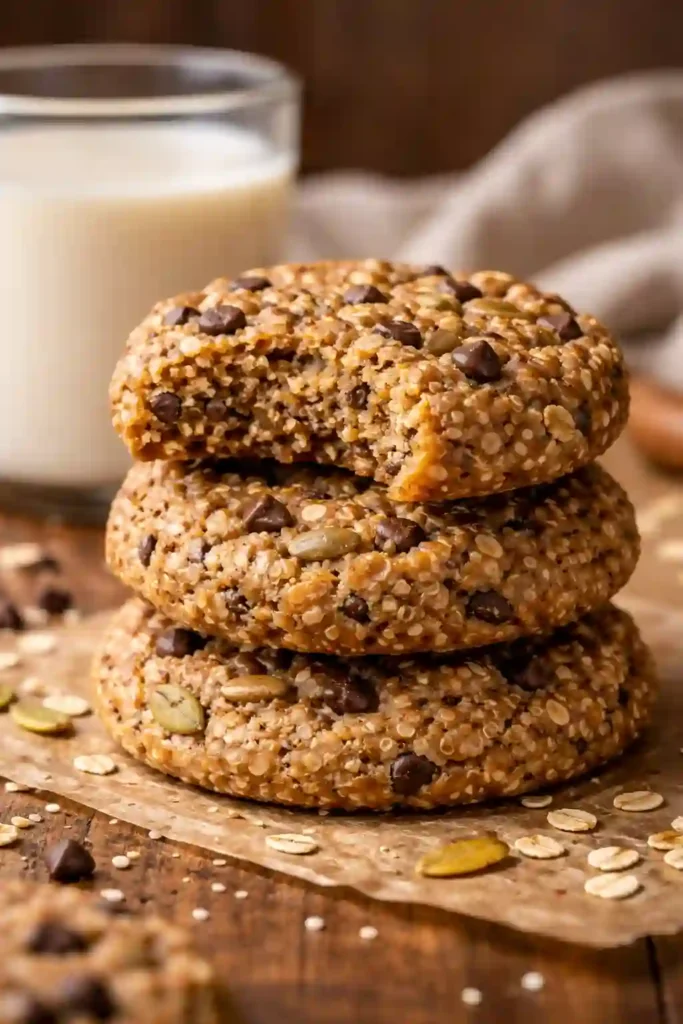
Using a cookie scoop or tablespoon, portion the dough into balls using approximately one and one-half tablespoons of dough per cookie. Place each portion on your prepared baking sheet, spacing them about two inches apart. These cookies don’t spread significantly during baking, so you can position them relatively close together.
Gently press each dough ball with your palm or the bottom of a glass to flatten them into discs approximately one-half inch thick, as they won’t spread or flatten naturally during baking.
Transfer the baking sheet to your preheated oven and bake for 14 to 18 minutes, rotating the pan halfway through the baking time to ensure even browning. The cookies are properly baked when their edges turn golden brown and the tops appear set rather than wet or shiny.
The centers may seem slightly soft, but they will firm considerably as the cookies cool. Avoid overbaking, as this creates dry, crumbly cookies rather than the desired chewy texture.
Cooling and Storage
Allow the cookies to cool on the baking sheet for five minutes after removing them from the oven. This resting period is essential, as the cookies are fragile when hot and require time to set properly.
After five minutes, carefully transfer the cookies to a wire cooling rack using a thin spatula, allowing them to cool completely before eating or storing. The texture continues developing during the cooling process, with the cookies becoming chewier and more cohesive as they reach room temperature.
Store completely cooled cookies in an airtight container at room temperature for up to five days. For extended storage, refrigerate the cookies for up to two weeks or freeze them for up to three months. We recommend placing parchment paper between layers when stacking to prevent sticking.
To serve frozen Seedy Quinoa Breakfast Cookies, simply remove them from the freezer and allow them to thaw at room temperature for 20 minutes, or microwave individual cookies for 15 to 20 seconds for a warm, freshly baked experience.
Nutritional Benefits and Health Advantages For Seedy Quinoa Breakfast Cookies
Our seedy quinoa breakfast cookies deliver impressive nutritional density that supports sustained energy and overall wellness. Each Seedy Quinoa Breakfast Cookies provides approximately five grams of plant-based protein, derived from the complementary amino acid profiles of quinoa, seeds, and tahini.
This protein content helps stabilize blood sugar levels, preventing the energy crashes associated with refined-carbohydrate breakfast options while promoting satiety that lasts throughout your morning.
The seed blend contributes substantial amounts of heart-healthy omega-3 fatty acids, particularly from hemp seeds and chia seeds. These essential fats support cardiovascular health, reduce inflammation, and contribute to optimal brain function.
The Seedy Quinoa Breakfast Cookies also provide significant dietary fiber, with each serving delivering approximately four grams, supporting digestive health and promoting feelings of fullness that help prevent mid-morning snacking on less nutritious options.
Mineral content in these cookies is particularly noteworthy. Pumpkin seeds supply zinc and magnesium, supporting immune function and bone health. Tahini contributes calcium and iron, while quinoa provides manganese and phosphorus.
This diverse mineral profile makes these cookies especially valuable for those following plant-based diets who may struggle to obtain adequate minerals from limited food sources.
Customization Options and Variations For Seedy Quinoa Breakfast Cookies
Flavor Modifications
Transform these cookies by incorporating warming spices that complement the nutty base flavors. Add one teaspoon of ground cinnamon for classic comfort, or include one-half teaspoon of ground ginger and one-quarter teaspoon of nutmeg for autumn-inspired complexity.
Cardamom brings sophisticated, aromatic notes when used sparingly at one-quarter teaspoon, while a pinch of sea salt flakes sprinkled on top before baking creates delightful savory-sweet contrast.
Texture Adjustments
Achieve crunchier cookies by lightly processing the oats and pumpkin seeds in a food processor with several quick pulses before incorporating them into the dough. This technique breaks down the larger pieces slightly, creating more uniform texture while improving the cookies’ structural integrity.
Avoid over-processing, as completely ground ingredients yield dense, compact cookies rather than the desired chewy consistency.
Dietary Accommodations
These cookies naturally accommodate numerous dietary requirements, though several substitutions expand their versatility further. Replace tahini with sunflower seed butter for nut-free environments, or use peanut butter if tree nut allergies are the sole concern.
Coconut oil can substitute for tahini if seed allergies are problematic, though you’ll need to reduce the quantity to one-quarter cup and add one tablespoon of water to maintain proper moisture levels.
Serving Suggestions and Meal Planning For Seedy Quinoa Breakfast Cookies

Breakfast Applications
These cookies excel as standalone breakfast items, providing balanced nutrition in convenient portable form. We recommend pairing two cookies with fresh fruit and a protein-rich beverage like almond milk or Greek yogurt for plant-based eaters who include dairy.
The combination delivers comprehensive macronutrients that sustain energy through demanding mornings without requiring sit-down meal time.
Crumble these cookies over overnight oats or yogurt parfaits for added texture and nutritional enhancement, creating layered breakfast bowls that feel indulgent while maintaining wholesome composition.
Snack and Meal Prep Integration
Incorporate these cookies into weekly meal prep routines by baking double or triple batches on Sunday afternoons, ensuring you have nutritious options readily available throughout the week. Package individual servings in small containers or reusable bags for grab-and-go convenience during rushed mornings or as afternoon energy boosters when mid-day fatigue strikes.
These cookies travel exceptionally well, making them ideal for lunch boxes, hiking trips, and long commutes. Their sturdy texture withstands transportation without crumbling, while their room-temperature stability eliminates refrigeration concerns during short-term storage.
Parents particularly appreciate these cookies for school lunches, as they’re nut-free when prepared with seed butter alternatives and provide substantially more nutrition than typical packaged snacks.
Troubleshooting Common Issues For Seedy Quinoa Breakfast Cookies
Texture Problems
If your cookies emerge from the oven dry and crumbly rather than chewy, several factors may be responsible. Overbaking is the most common culprit, so reduce baking time by two minutes in subsequent batches and remove cookies when they appear slightly underdone.
Insufficient moisture in the dough also creates dryness, which can result from measuring errors or from using tahini that’s too thick. Add water one teaspoon at a time to future batches until the dough achieves better cohesion.
Conversely, excessively wet, gummy cookies indicate too much moisture in the initial mixture. Ensure your quinoa is completely cooled and well-drained before use, as warm or wet quinoa introduces excess moisture that creates dense texture.
If your dough seems too wet before baking, incorporate additional rolled oats one tablespoon at a time until the mixture holds together without being sticky.
Binding and Structural Concerns
Cookies that fall apart or won’t hold together typically result from inadequate binding or insufficient pressing during shaping. Make sure to flatten each cookie firmly before baking, as the pressure helps ingredients adhere to one another. The cooling period on the baking sheet is also crucial, as moving cookies too early prevents them from setting properly.
If you consistently experience binding problems, increase the chia seeds by one tablespoon, as these super seeds absorb liquid and create gel-like consistency that improves structural integrity.
Alternatively, add one tablespoon of ground flaxseed mixed with two tablespoons of water, allowing this mixture to sit for five minutes before incorporating it into your dough. This “flax egg” provides additional binding without altering flavor significantly.
Flavor Balance
If your cookies taste too bland, increase the salt slightly or add vanilla extract and warming spices to enhance complexity. Conversely, if they seem overly salty, reduce the salt to one-quarter teaspoon in future batches.
Those finding the cookies insufficiently sweet can drizzle additional maple syrup over the tops immediately after removing them from the oven, or increase the maple syrup in the dough by one tablespoon while reducing the tahini by one tablespoon to maintain proper moisture balance.
Related Articles & Recipes
- Olive Garden Spinach Artichoke Dip
- apple crumble pie
- veggie christmas tree platter
- Christmas Tree Brownies
- Christmas Tree Meringue Cookies
- Keto English Muffin
- Cheese & Marmite Scones
- Buttermilk Scones Techniques
- Pumpkin Scones – Savory Variation
- Keto Scones
Frequently Asked Questions For Seedy Quinoa Breakfast Cookies
Can we make these cookies without quinoa?
While quinoa contributes significant protein and unique texture, you can substitute cooked brown rice or additional rolled oats if necessary. Understand that this modification changes the nutritional profile and texture somewhat, creating cookies that are more traditional in character but less protein-dense.
How do we prevent cookies from spreading during baking?
These cookies naturally maintain their shape with minimal spreading, but if you experience excessive spreading, ensure your dough isn’t too warm when shaped.
Are these cookies suitable for toddlers and young children?
These cookies are generally appropriate for children over one year who have been introduced to all ingredient components individually without adverse reactions. The texture is soft enough for developing teeth, and the nutritional density supports growing bodies.
Can we prepare the dough in advance?
The dough stores well refrigerated in an airtight container for up to three days, making it convenient for baking fresh cookies as needed. The dough may firm slightly during refrigeration, so allow it to sit at room temperature for 10 minutes before shaping if it becomes too stiff to work with easily.
What’s the best way to pack these cookies for travel?
Layer cooled cookies between sheets of parchment paper in rigid containers to prevent crushing during transport. For backpacking or long hikes, individually wrap each cookie in aluminum foil or plastic wrap, then pack them in the center of your bag surrounded by softer items that provide cushioning.
Conclusion For Seedy Quinoa Breakfast Cookies
We’ve created these seedy quinoa breakfast cookies to solve the perpetual challenge of finding morning nutrition that genuinely satisfies while supporting health goals.
Through careful selection of wholesome ingredients and straightforward preparation methods, we’ve developed a recipe that delivers authentic nourishment without requiring extensive time investment or culinary expertise.
These cookies represent more than convenient breakfast solution they embody our philosophy that healthy eating shouldn’t require sacrifice or compromise.
The combination of ancient grains, nutrient-dense seeds, and natural sweeteners creates cookies that taste indulgent while providing sustained energy and comprehensive nutrition.
Whether you’re rushing out the door on weekday mornings, packing lunch boxes, or seeking wholesome snacks for active lifestyles, these cookies adapt seamlessly to diverse needs and preferences.