

Why Clove Tea Recipe for Weight Loss Deserves a Place in Your Wellness Routine
We’ve spent months perfecting this Clove Tea Recipe for Weight Loss, testing different ratios and brewing methods to deliver maximum flavor and potential benefits. What started as curiosity about traditional remedies evolved into a daily ritual that supports our wellness goals naturally.
Clove tea offers a caffeine-free alternative to traditional teas, making it perfect for evening consumption. The aromatic warmth comes from eugenol, the primary compound in cloves that researchers have studied for its potential anti-inflammatory and digestive properties. Unlike complicated wellness protocols, this recipe requires just two ingredients and less than fifteen minutes.
The distinctive spicy-sweet flavor profile creates a satisfying beverage that naturally reduces cravings for sugary drinks. When we replaced afternoon sodas with clove tea, we noticed decreased bloating and improved digestion within two weeks. These personal observations align with traditional medicine practices that have utilized cloves for centuries.
Table of Contents
Essential Ingredients for Perfect Clove Tea Recipe for Weight Loss
Primary Ingredients
Whole Cloves (5-6 per cup): We exclusively use whole cloves rather than ground versions. Whole cloves maintain essential oils longer and steep cleanly without creating gritty residue. Look for plump, reddish-brown cloves with strong aromatic scent. Dried, faded cloves indicate reduced potency.
Filtered Water (8-12 oz per serving): Water quality directly affects final taste. We use filtered water to avoid chlorine or mineral flavors that compete with delicate clove notes.
Optional Flavor Enhancers
Fresh Ginger (3-4 slices): Adds complementary warmth and supports digestive benefits. We peel and slice ginger thinly for optimal flavor extraction.
Cinnamon Stick (1 small stick): Creates depth without overwhelming clove’s distinctive taste. Use Ceylon cinnamon for milder sweetness.
Raw Honey (1 teaspoon): Provides natural sweetness and soothes throat. Add after brewing to preserve enzymes.
Fresh Lemon (1 slice or 1 tablespoon juice): Brightens flavor and adds vitamin C. Always add after straining to prevent metallic taste.
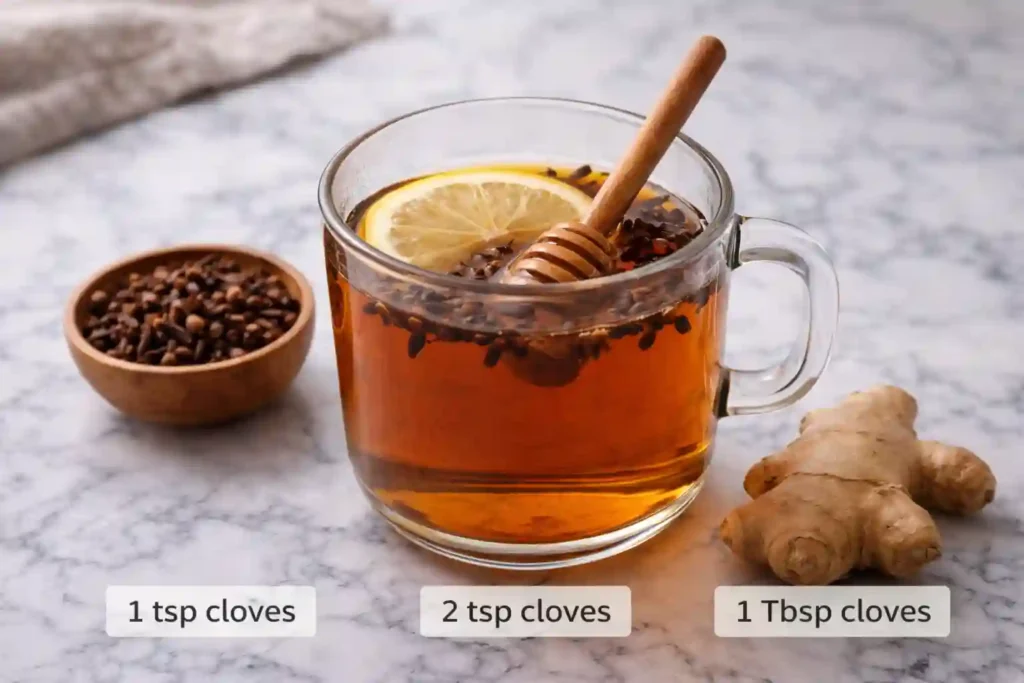
How to Make Clove Tea Recipe for Weight Loss: Two Proven Methods
Method 1: Quick Steep Technique
This approach produces lighter, more delicate flavor ideal for regular consumption.
Step 1: Bring 8-12 oz water to rolling boil in kettle or pot.
Step 2: Remove from heat and wait 45-60 seconds until temperature drops to approximately 200°F (93°C).
Step 3: Place 5 whole cloves in heat-safe mug.
Step 4: Pour hot water directly over cloves.
Step 5: Cover mug with small plate to trap aromatic compounds.
Step 6: Steep for 7-10 minutes depending on desired intensity.
Step 7: Strain cloves using fine mesh strainer or remove with spoon.
Step 8: Add optional honey, lemon, or milk if desired.
Method 2: Stovetop Simmer Technique
This method extracts maximum flavor and creates bolder, more aromatic tea.
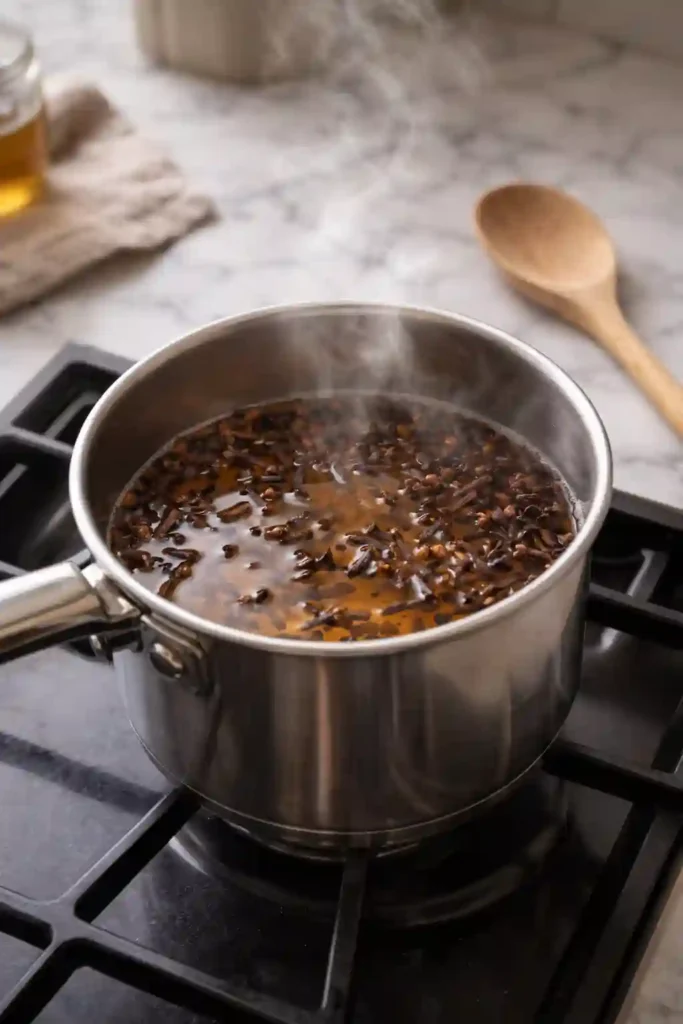
Step 1: Add 8-12 oz water to small saucepan.
Step 2: Add 6-7 whole cloves directly to water.
Step 3: Bring to gentle boil over medium-high heat.
Step 4: Reduce heat to low and maintain gentle simmer for 6-8 minutes.
Step 5: Remove from heat, cover with lid, and rest for 3-5 minutes.
Step 6: Strain into serving mug using fine mesh strainer.
Step 7: Customize with optional additions.
We alternate between methods based on circumstances. The quick steep works perfectly for busy mornings, while the simmer method creates superior results when we have extra time.
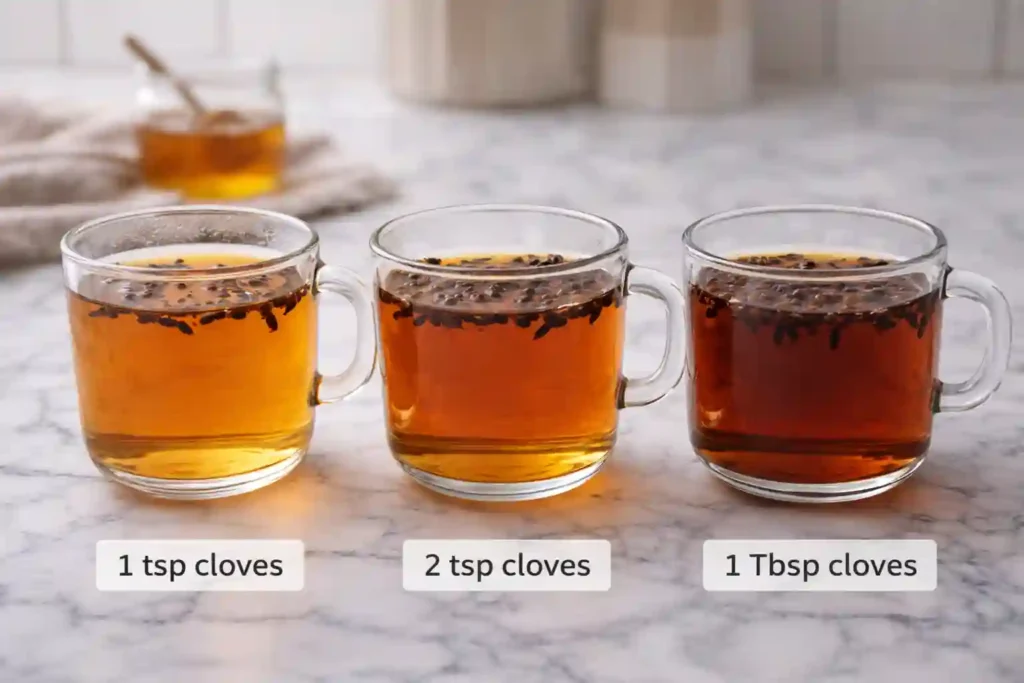
How Many Cloves Per Cup of Tea: Finding Your Perfect Ratio
Determining optimal clove quantity requires understanding that clove potency varies by freshness and individual taste preferences. We developed this guide through extensive testing.
Clove Quantity Guide
Mild Strength (3-4 cloves): Produces gentle warmth without overwhelming palate. Recommended for beginners or those sensitive to strong flavors. Ideal for afternoon consumption when lighter taste preferred.
Medium Strength (5-6 cloves): Our recommended starting point for most people. Delivers balanced clove flavor with noticeable warmth. This ratio works well for daily consumption.
Bold Strength (7-8 cloves): Creates intense, aromatic tea with pronounced spiciness. Best for experienced clove tea drinkers or when using tea medicinally for cough relief. Monitor steep time carefully to prevent bitterness.
Critical Note: Exceeding 8 cloves per cup frequently results in unpleasantly bitter tea with mouth-numbing sensation. Start conservatively and adjust upward gradually.
Adjusting for Cup Size
- 6 oz cup: Reduce by 1-2 cloves
- 8-10 oz cup: Standard measurements apply
- 12-16 oz mug: Add 1-2 additional cloves
Understanding Clove Tea Benefits for Weight Loss
We approach weight loss claims with healthy skepticism. Clove tea supports weight management indirectly rather than producing dramatic results independently.
Realistic Weight Loss Support Mechanisms
Calorie Replacement: Each cup contains virtually zero calories. Replacing 200-calorie sugary beverages with clove tea three times daily creates 600-calorie weekly deficit, potentially supporting 1-2 pounds monthly weight loss.
Appetite Regulation: The warming sensation and aromatic compounds create satiety signals. We noticed reduced snacking when drinking clove tea between meals.
Digestive Support: Clove compounds may support healthy digestion and reduce bloating. Improved digestion correlates with better nutrient absorption and reduced inflammation.
Blood Sugar Stability: Preliminary research suggests clove compounds may influence glucose metabolism, though human studies remain limited.
Metabolic Support: Some studies indicate eugenol may support healthy metabolic function, though effects remain modest.
What Clove Tea Cannot Do
We must emphasize that no beverage produces significant weight loss independently. Clove tea works best as one component of comprehensive approach including balanced nutrition, regular movement, adequate sleep, and stress management.
Marketing claims suggesting dramatic weight loss from clove tea alone lack scientific support. We view this tea as supportive tool rather than primary solution.
Additional Clove Tea Benefits Beyond Weight Loss
Digestive Wellness
Clove’s natural compounds support digestive enzyme activity. We consistently notice reduced bloating when drinking clove tea after heavy meals. Traditional medicine systems have utilized cloves for digestive complaints for centuries.
Anti-Inflammatory Properties
Eugenol demonstrates anti-inflammatory effects in laboratory studies. While drinking tea delivers lower concentrations than research settings, regular consumption may provide cumulative anti-inflammatory support.
Respiratory Relief
We developed a specific clove tea recipe for cough that combines cloves with ginger, honey, and lemon. The warming properties and antimicrobial compounds create genuine throat-soothing effects during cold season.
Oral Health Support
Clove’s antimicrobial properties support oral hygiene. Swishing warm clove tea after meals provides gentle mouth freshening without harsh chemicals.
Antioxidant Content
Cloves rank among highest-antioxidant spices. Regular consumption contributes to overall antioxidant intake, supporting cellular health.
Clove Tea Recipe for Weight Loss for Cough and Cold Relief
When seasonal illness strikes, we modify our standard recipe for enhanced respiratory support.
Enhanced Cold-Fighting Recipe
Ingredients:
- 6-7 whole cloves
- 10 oz water
- 4-5 slices fresh ginger (peeled)
- 1 cinnamon stick
- 1 tablespoon raw honey (added after straining)
- Juice from half lemon (added after straining)
Instructions:
- Combine water, cloves, ginger, and cinnamon in small pot
- Bring to gentle boil, reduce heat to low
- Simmer uncovered for 8-10 minutes
- Remove from heat, cover, rest 5 minutes
- Strain into large mug
- Stir in honey until dissolved
- Add fresh lemon juice
- Sip slowly while warm
Usage Protocol: Drink 2-3 cups daily when experiencing cold symptoms. The combination of warming spices, honey’s throat-coating properties, and lemon’s vitamin C creates comprehensive respiratory support.
How Long to Steep Cloves in Tea for Optimal Results
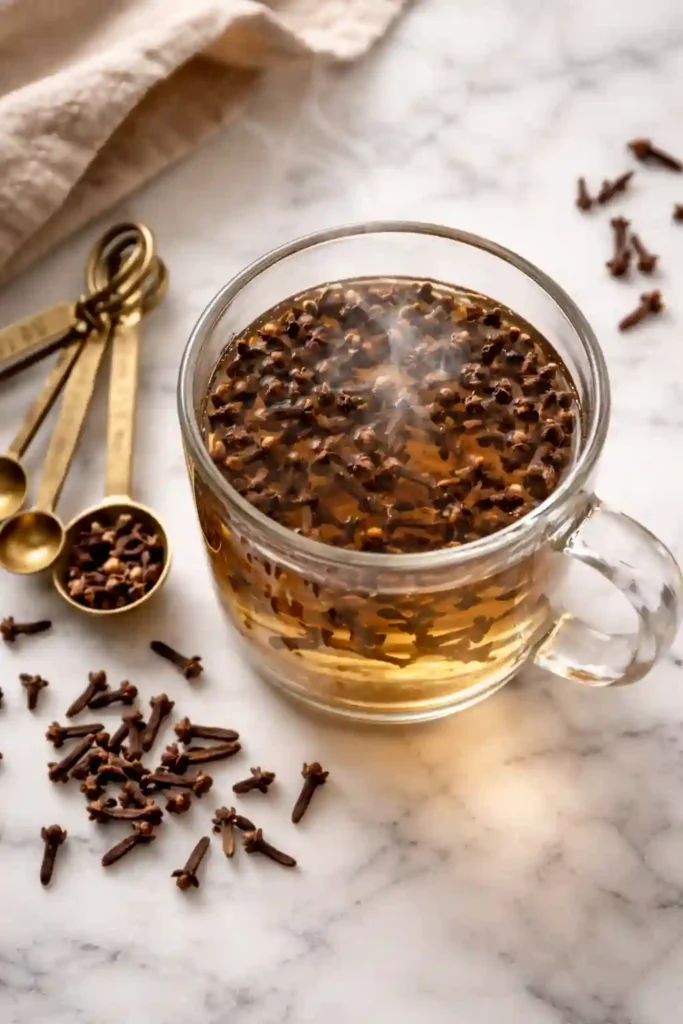
Steep duration dramatically affects flavor intensity and potential bitterness. We determined these timing guidelines through systematic testing.
Steep Method Timing
5 minutes: Produces very mild tea with subtle clove notes. Suitable for extreme sensitivity or first-time tasters.
7 minutes: Our recommended standard timing. Creates balanced flavor without bitterness risk.
10 minutes: Maximum steep time before bitterness develops. Produces strong but pleasant tea.
Beyond 10 minutes: Increasingly bitter with astringent mouthfeel. Only appropriate when intentionally creating medicinal-strength preparation.
Simmer Method Timing
5 minutes simmer + 2 minutes rest: Light to medium strength
7 minutes simmer + 3 minutes rest: Medium strength (our standard)
8 minutes simmer + 5 minutes rest: Bold strength approaching maximum intensity
Beyond these times: Risk of excessive bitterness increases substantially
Troubleshooting Bitter Tea
When tea tastes unpleasantly bitter, we recover it by adding fresh lemon juice and honey. The acidity counteracts bitterness while sweetness balances flavor. For future batches, reduce clove count or shorten steep time.
Clove Tea Recipe for Weight Loss vs Clove Water: Understanding the Difference
These terms appear frequently online, often used interchangeably despite representing different preparations.
Clove Tea Characteristics
- Prepared with hot or boiling water
- Typically steeped 5-10 minutes or simmered briefly
- Consumed warm or hot
- Traditional preparation method with historical backing
- Heat extraction maximizes beneficial compound release
Clove Water Characteristics
- Prepared by soaking cloves in room temperature or cold water
- Often left overnight (8-12 hours)
- Consumed cold or at room temperature
- Popular in recent social media wellness trends
- Claims often exceed scientific evidence
We prefer traditional hot tea preparation. Heat facilitates efficient extraction of eugenol and other beneficial compounds. Cold-soaked clove water produces weaker flavor requiring more cloves, potentially increasing risk of consuming excessive amounts.
Many viral clove water protocols make exaggerated claims about detoxification or dramatic weight loss. These assertions lack rigorous scientific support. Hot tea preparation offers superior taste and more predictable results.
Creative Clove Tea Recipe for Weight Loss Variations We Love
After mastering basic preparation, we experimented with numerous flavor combinations. These variations became regular rotation staples.
Spiced Clove Chai
Ingredients: 6 cloves, 3 cardamom pods (lightly crushed), 1 cinnamon stick, 2 slices ginger, 1 cup water, splash of milk or oat milk, honey to taste
Method: Simmer all spices together for 8 minutes, strain, add milk and honey. Creates simplified chai without requiring five different spices.
Golden Clove Tea
Ingredients: 5 cloves, 1/2 teaspoon turmeric powder, 3 slices ginger, 1 cup water, pinch black pepper, honey and lemon to taste
Method: Simmer spices for 6 minutes, add turmeric during final minute, strain, add honey and lemon. Combines clove benefits with turmeric’s anti-inflammatory properties.
Creamy Evening Clove Tea
Ingredients: 4 cloves, 1 cup water, 2 tablespoons warm milk (dairy or plant-based), 1/2 teaspoon vanilla extract, honey to taste
Method: Prepare clove tea using steep method, add warmed milk, vanilla, and honey. Creates comforting bedtime beverage.
Iced Clove Tea (Summer Version)
Ingredients: 8 cloves, 1.5 cups water, ice, lemon slices, fresh mint
Method: Prepare extra-strong tea using simmer method, cool completely, refrigerate, serve over ice with lemon and mint garnish. Surprisingly refreshing warm-weather drink.
Clove Tea Safety: Side Effects and Precautions
We believe in providing complete information including potential concerns.
Who Should Exercise Caution
Blood-Thinning Medication Users: Eugenol may enhance anticoagulant effects. Consult healthcare provider before regular consumption if taking warfarin, aspirin, or similar medications.
Pregnancy and Breastfeeding: Culinary clove amounts generally considered safe. Concentrated tea consumed frequently lacks sufficient safety data. Discuss with healthcare provider.
Bleeding Disorders: Clove’s potential blood-thinning properties warrant caution for hemophilia or similar conditions.
Scheduled Surgery: Discontinue clove tea at least two weeks before planned procedures due to bleeding risk.
Liver Conditions: High eugenol doses associated with liver concerns in some cases. Moderate consumption (1-2 cups daily) appears safe for most people with healthy liver function.
Common Side Effects of Excessive Consumption
Digestive Upset: Consuming very strong tea or excessive amounts may cause nausea, heartburn, or stomach discomfort.
Mouth Sensitivity: Prolonged contact with concentrated clove tea may temporarily numb mouth tissues.
Allergic Reactions: Rare but possible. Discontinue immediately if experiencing rash, swelling, or breathing difficulties.
Safe Consumption Guidelines
We follow these personal guidelines based on research and experience:
- Limit consumption to 2-3 cups daily
- Use moderate strength (5-6 cloves per cup)
- Avoid drinking on empty stomach if prone to digestive sensitivity
- Take breaks periodically (we do 5 days on, 2 days off)
- Monitor body’s response and adjust accordingly
Storage and Make-Ahead Tips for Convenience
Busy schedules sometimes conflict with brewing individual cups. We developed these practical solutions.
Storing Brewed Tea
Refrigerator Storage: Strained clove tea keeps 3-4 days in sealed glass jar or bottle. Flavor intensifies during storage, creating stronger taste when reheated.
Reheating Methods: Gentle stovetop warming preserves flavor better than microwave. Heat until warm but not boiling.
Batch Brewing Strategy
Sunday Prep: We brew triple batch using stovetop method every Sunday evening. After straining, we divide among glass jars and refrigerate. Each morning, we reheat single serving.
Concentrate Method: Prepare very strong batch (10 cloves per cup), refrigerate, then dilute with hot water when serving. Extends storage life while maintaining flexibility.
Storing Whole Cloves
Optimal Conditions: Keep whole cloves in airtight container away from light, heat, and moisture. Properly stored cloves maintain potency for one year.
Freshness Test: Quality cloves release strong aroma when container opened. If scent seems weak or stale, replace supply.
Buying Tips: Purchase from stores with high turnover. Bulk spice sections often provide fresher options than pre-packaged jars sitting on shelves for months.
Best Time to Drink Clove Tea Recipe for Weight Loss for Maximum Benefits
We structure our clove tea consumption strategically for optimal results.
Morning Consumption (6-9 AM)
Benefits: Jump-starts digestion, provides warming sensation without caffeine jitters, creates satisfying ritual replacing sugary breakfast beverages.
Recommended Strength: Medium (5-6 cloves)
Additions: Ginger and lemon for energizing morning boost
Afternoon Consumption (2-4 PM)
Benefits: Prevents afternoon energy crash without caffeine interference with evening sleep, reduces mindless snacking, supports digestion if consumed after lunch.
Recommended Strength: Mild to medium (4-5 cloves)
Additions: Honey for gentle sweetness, cinnamon for flavor depth
Evening Consumption (7-9 PM)
Benefits: Caffeine-free option won’t disrupt sleep, warming ritual signals wind-down time, supports digestion after dinner.
Recommended Strength: Mild (3-4 cloves)
Additions: Warm milk, honey, vanilla for comforting bedtime beverage
Post-Meal Consumption
Benefits: Supports healthy digestion, reduces bloating, provides satisfying conclusion to meal without dessert calories.
Recommended Timing: 15-30 minutes after eating
Recommended Strength: Medium (5-6 cloves)
PrintClove Tea Recipe for Weight Loss

When seasonal illness strikes, we modify our standard recipe for enhanced respiratory support.
- Prep Time: 2 minutes
- Cook Time: 10 minutes
- Total Time: 12 minutes
- Yield: 1 cup (8–12 oz) 1x
- Category: Beverage, Drinks
- Cuisine: Traditional/Herbal
- Diet: Gluten Free
Ingredients
- 5–6 whole cloves (adjust to taste preference)
- 1 cup (8–12 oz) filtered water
- Optional additions:
- 1 teaspoon raw honey
- 1 tablespoon fresh lemon juice
- 3–4 slices fresh ginger
- 1 small cinnamon stick
- Splash of milk (dairy or plant-based)
Instructions
Quick Steep Method (Recommended for beginners):
- Bring 1 cup of water to a rolling boil in a kettle or small pot.
- Remove from heat and let water rest for 45-60 seconds to reach approximately 200°F (93°C).
- Place 5 whole cloves into a heat-safe mug or cup.
- Pour the hot water over the cloves and cover the mug with a small plate to trap steam.
- Steep for 7-10 minutes, depending on desired strength (7 minutes for balanced flavor).
- Strain out the cloves using a fine mesh strainer or remove them with a spoon.
- Add optional honey, lemon juice, or milk if desired.
- Stir well and enjoy while warm.
Stovetop Simmer Method (For bolder flavor):
- Add 1 cup of water to a small saucepan.
- Add 6-7 whole cloves directly to the water.
- Bring to a gentle boil over medium-high heat.
- Reduce heat to low and maintain a gentle simmer for 6-8 minutes.
- Remove from heat, cover with a lid, and let rest for 3-5 minutes.
- Strain the tea into your serving mug using a fine mesh strainer.
- Add optional honey, lemon, ginger, or other additions as desired.
- Serve immediately while warm.
Notes
- Clove Strength Guide: Use 3-4 cloves for mild tea, 5-6 for medium strength (recommended), or 7-8 for bold, intense flavor.
- Avoid Bitterness: Don’t steep longer than 10 minutes or use more than 8 cloves per cup, as this creates bitter taste.
- Ground Cloves: Not recommended. If you must use them, add only 1/8 teaspoon per cup and strain through a coffee filter.
- Storage: Refrigerate strained tea for up to 3-4 days. Reheat gently on stovetop before serving.
- Best Time to Drink: Morning for digestive support, afternoon to curb cravings, or evening as a caffeine-free relaxation drink.
- For Cough Relief: Add fresh ginger slices, cinnamon stick, honey, and lemon for enhanced respiratory support.
Nutrition
- Serving Size: 1 serving
- Calories: 2-4 calories
- Sodium: 2mg
- Carbohydrates: 0.5g
More Fruity Drink Ideas
Fancy a change of pace? Try one of these delicious creations
- Pink Salt Weight Loss – Homemade Mounjaro Recipe with Pink Salt
- Mounjaro Recipe with Pink Salt – clean and cooling
- Matcha Bubble Tea – a trendy twist
- Pineapple Skin Tea – great for zero waste
- Strawberry Milk Bubble Tea – citrusy and creamy
- Chocolate Bubble Milk Tea Boba – crowd-pleasing fall beverage
- Caramel Milk Tea – an adult upgrade of this recipe
Frequently Asked Questions About Clove Tea Recipe for Weight Loss
Can I drink clove tea every day?
Yes, most healthy adults tolerate 1-2 cups daily without issues. We drink clove tea 5-6 days weekly, taking occasional breaks to prevent potential tolerance. Start with lower frequency and observe body’s response before establishing daily routine.
Does clove tea contain caffeine?
No, pure clove tea made from whole cloves and water contains zero caffeine. This makes it excellent choice for evening consumption or those avoiding stimulants. To create caffeinated version, steep black or green tea bag in prepared clove tea.
Will clove tea help me lose weight quickly?
No single beverage produces rapid weight loss. Clove tea supports weight management by replacing high-calorie drinks, potentially reducing appetite, and supporting digestion. Realistic expectations involve gradual progress combined with overall lifestyle improvements.
How does clove tea taste?
Clove tea delivers warm, spicy-sweet flavor with slight numbing sensation on tongue. The taste resembles holiday baking spices or mulled cider components. Proper preparation creates pleasant aromatic experience; excessive strength produces unpleasant bitterness.
Can I reuse cloves for multiple cups?
We don’t recommend this practice. After initial steeping or simmering, cloves release majority of flavor compounds and beneficial oils. Reused cloves produce significantly weaker tea lacking characteristic taste and potential benefits.
Conclusion: Making Clove Tea Recipe for Weight Loss Part of Your Wellness Journey
After extensive testing and daily consumption, we confidently recommend incorporating clove tea into balanced wellness routine. This simple preparation delivers warming comfort, potential digestive support, and satisfying alternative to sugary beverages.
We encourage starting with basic recipe using 5 whole cloves steeped 7 minutes in hot water. Observe how your body responds before adjusting strength or frequency. Pay attention to personal preferences regarding timing, flavor additions, and preparation method.
Remember that consistency matters more than perfection. Drinking moderate-strength clove tea several times weekly delivers better results than occasional consumption of extremely concentrated preparations. Build sustainable habit rather than pursuing dramatic short-term effects.
Start your first cup today. Notice the aromatic warmth, observe your body’s response, and decide if this ancient remedy deserves regular place in your modern wellness routine.