

Why Whole Roasted Cauliflower
We believe that vegetables deserve the spotlight, and whole roasted cauliflower proves exactly that. This preparation method transforms an unassuming cruciferous vegetable into a golden, caramelized masterpiece worthy of any dinner table.
Unlike chopped florets that can dry out or become uneven, roasting the entire head creates a tender interior with a beautifully charred exterior that develops complex, nutty flavors through the Maillard reaction.
The technique gained widespread recognition through innovative chefs who recognized cauliflower‘s potential as a vegetarian centerpiece.
Table of Contents
Essential Ingredients for Perfectly Roasted Whole Cauliflower
For the Cauliflower Base
- 1 lb cauliflower (approximately 1 medium head)
- 2 tbsp olive oil (extra virgin preferred for depth)
- 1 tsp Dijon mustard (adds complexity and helps seasonings adhere)
- ½ tbsp fresh lemon juice (brightens flavors)
- 1 tsp garlic powder (for savory depth)
- ½ tsp freshly ground black pepper
- ⅓ tsp ground turmeric (provides golden color and earthy notes)
- 1 tsp Italian seasoning blend (or combination of dried oregano, basil, thyme)
- ½ tsp sea salt (adjust to taste)
For the Tahini Sauce
- 2 tbsp tahini paste (well-stirred before measuring)
- ½ fresh lemon (juiced, approximately 1½ tbsp)
- 1 tsp pure maple syrup (balances tahini’s natural bitterness)
- Pinch of sea salt
- ¼ cup filtered water (adjust for desired consistency)
For Garnish
- 1 tbsp fresh flat-leaf parsley (finely chopped)
- 1 tbsp shelled pistachios (roughly chopped, toasted if desired)
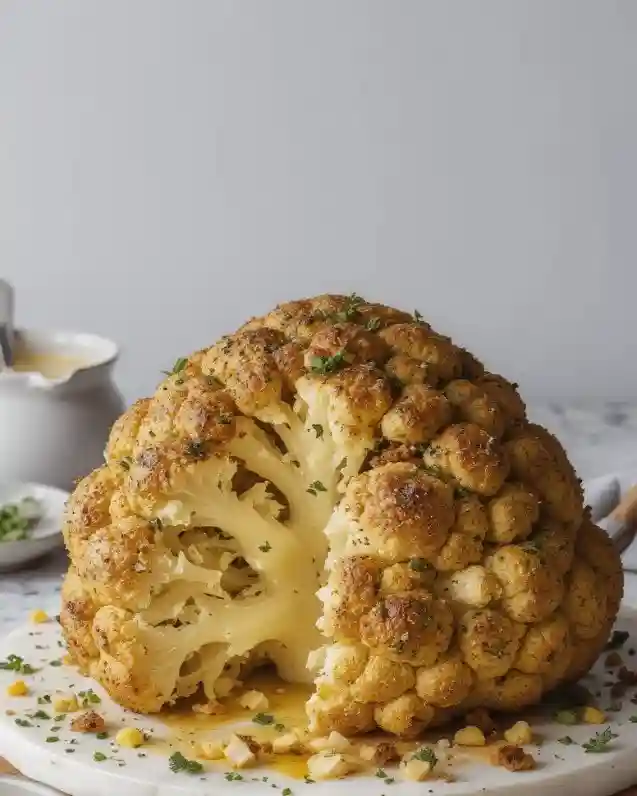
Step-by-Step Instructions: Mastering Whole Roasted Cauliflower
Preparation Phase (10 minutes)
1. Select and Prepare Your Cauliflower
Begin by examining your cauliflower head. We recommend choosing one with tightly packed, creamy-white florets and bright green leaves. Remove the outer leaves and trim the stem flat so the cauliflower sits level. Leave the core intact—it holds the head together during roasting and becomes wonderfully tender when cooked properly.
2. The Critical Par-Boiling Step
Fill your largest pot three-quarters full with water and bring to a rolling boil over high heat. Add a generous pinch of salt (approximately 1 tablespoon per gallon of water). Gently lower the cauliflower head into the boiling water, stem-side down. Set a timer for exactly 5 minutes.
This par-boiling step serves multiple purposes: it jump-starts the cooking process, ensures even doneness throughout the dense head, and shortens overall roasting time while preventing the exterior from burning before the interior cooks through.
After 5 minutes, use tongs or a large slotted spoon to carefully transfer the cauliflower to a colander. Allow it to drain thoroughly and cool for 2-3 minutes while you prepare the seasoning mixture.
3. Create the Aromatic Spice Rub
In a medium mixing bowl, combine olive oil, Dijon mustard, and lemon juice. Whisk vigorously until emulsified—this creates a base that helps all seasonings adhere uniformly. Add garlic powder, black pepper, turmeric, Italian seasoning, and sea salt. Whisk again until you have a smooth, fragrant paste with no dry pockets of spice.
Roasting Phase (30-35 minutes)
4. Season and Position
Preheat your oven to 400°F (200°C). While the oven heats, place the par-boiled cauliflower in a cast-iron skillet or ceramic baking dish. Using a pastry brush or your hands, generously apply the spice rub to every visible surface of the cauliflower. Work the mixture into the crevices between florets—these hidden pockets develop the most intense flavors during roasting.
5. Monitor the Roasting Process
Place the dish on the center rack of your preheated oven. Roast for 30 minutes without opening the door (this maintains consistent temperature). The cauliflower is ready when:
- A knife slides easily through the thickest part of the stem
- The surface displays golden-brown caramelization with some darker spots
- The florets feel tender when gently pressed with tongs
If your cauliflower appears pale after 30 minutes, increase temperature to 425°F and continue roasting, checking every 3-4 minutes. For extra-large heads, expect 35-40 minutes total cooking time.
6. Rest Before Serving
Remove from oven and let rest for 5 minutes. This allows residual heat to finish cooking the center while redistributing internal moisture for optimal texture.
Finishing Touches (5 minutes)
7. Prepare Fresh Tahini Sauce
While the cauliflower rests, prepare your tahini sauce. In a small bowl, combine tahini paste, fresh lemon juice, maple syrup, and salt. Whisk briskly while gradually adding water. The mixture will initially seize and thicken (this is normal), then smooth out as you continue whisking. Adjust water content until you achieve a pourable consistency similar to heavy cream—it should drizzle elegantly rather than glob.
8. Plate and Garnish
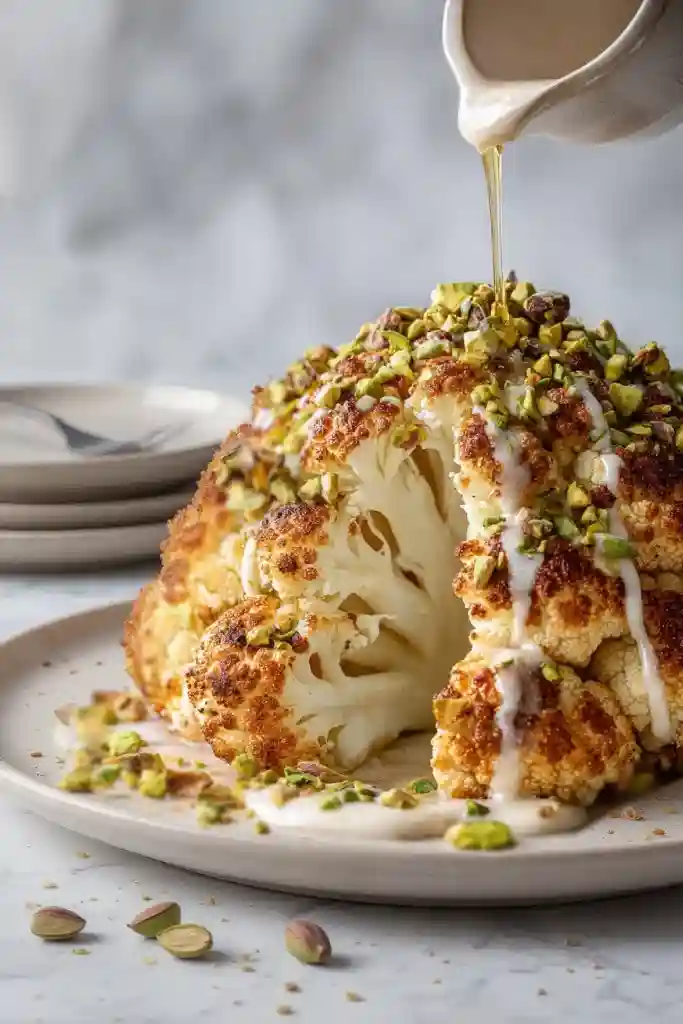
Transfer the roasted cauliflower to your serving platter. Pour half the tahini sauce over the top, allowing it to cascade down the sides. Drizzle remaining sauce in decorative patterns. Immediately sprinkle with freshly chopped parsley and crushed pistachios while the surface is still hot—the residual heat releases aromatic oils from the garnishes, intensifying their flavors.
Understanding Whole Roasted Cauliflower Timing and Techniques
How Long Does It Take to Roast a Whole Cauliflower?
The complete process from raw cauliflower to plated dish requires approximately 40-45 minutes:
- Preparation: 5 minutes (trimming, mixing seasonings)
- Par-boiling: 5 minutes (plus 3 minutes cooling)
- Roasting: 30-35 minutes (varies by size)
- Resting: 5 minutes (critical for optimal texture)
We cannot overstate the importance of the par-boiling step. Without it, achieving a properly cooked interior while developing exterior caramelization becomes nearly impossible. The dense, compact nature of cauliflower means heat penetrates slowly—pre-cooking the center ensures even doneness throughout.
Should You Boil Cauliflower Before Roasting?
Absolutely, and here’s why we consider it non-negotiable:
Structural Benefits: Par-boiling partially breaks down cell walls, allowing heat to penetrate more efficiently during roasting. This prevents the common problem of burnt exteriors with crunchy, underdone cores.
Timing Advantages: By jump-starting the cooking process, par-boiling reduces overall roasting time. This matters because extended high-heat exposure can dry out the vegetable’s delicate florets.
Texture Optimization: The brief boil creates a creamy interior texture that contrasts beautifully with the crispy, caramelized outer layer developed during roasting.
Alternative Methods: If you prefer to skip boiling, we recommend microwaving the whole head for 4-5 minutes instead, though results vary depending on microwave wattage.
What Are Common Mistakes to Avoid When Roasting Whole Roasted Cauliflower?
1. Insufficient Seasoning
Cauliflower’s mild flavor requires assertive seasoning. We recommend tasting your spice mixture before applying it—if it tastes bold in the bowl, it will be perfectly balanced on the finished dish.
2. Overcrowding the Pan
Place only one cauliflower head per baking dish. Crowding multiple heads prevents proper air circulation, resulting in steaming rather than roasting. For meal prep, roast in batches.
3. Opening the Oven Door Repeatedly
Each time you check progress, oven temperature drops by 25-50°F, extending cooking time and creating uneven results. Trust the process and check only after the minimum recommended time.
4. Skipping the Rest Period
Cutting immediately after removing from the oven releases internal steam, resulting in a drier texture. The 5-minute rest allows juices to redistribute throughout the head.
5. Using Cold Olive Oil
Room-temperature oil blends more easily with spices, creating a smoother, more adherent coating. Remove olive oil from the refrigerator 30 minutes before cooking.
Does Cauliflower Roast Well?
Cauliflower excels at roasting due to its unique cellular structure. The vegetable contains natural sugars (primarily glucose and fructose) that caramelize beautifully at high temperatures, developing nutty, slightly sweet flavors absent in raw or steamed preparations.
Additionally, cauliflower’s low moisture content compared to vegetables like zucchini means it roasts rather than steams, achieving the desired golden-brown crust.
The compact floret structure creates countless tiny surface areas that crisp individually, producing varied textures within a single bite—some pieces tender and yielding, others satisfyingly crunchy. This textural complexity distinguishes well-roasted cauliflower from most other vegetables.
The Ottolenghi Influence: Elevating Whole Roasted Cauliflower
Chef Yotam Ottolenghi’s approach to whole roasted cauliflower revolutionized how Western kitchens perceive this humble vegetable. His technique draws from Middle Eastern culinary traditions where whole vegetables are celebrated as main courses rather than relegated to side dish status.
Signature Ottolenghi Elements
Bold Spice Layering: Rather than single-note seasoning, Ottolenghi builds complexity through complementary spices—cumin’s earthiness, coriander’s citrus notes, turmeric’s bitter warmth—each enhancing the others.
Textural Contrasts: The philosophy emphasizes varied textures: creamy tahini against crispy cauliflower, tender flesh versus crunchy nuts, smooth sauce with rough-chopped herbs.
Visual Drama: Presentation matters. Vibrant garnishes like pomegranate arils, fresh herbs, and colorful spices transform the dish into a conversation piece.
Adapting Ottolenghi’s Approach
While we’ve streamlined the technique for home cooks, you can incorporate additional Ottolenghi-inspired elements:
- Add 1 tsp ground cumin and ½ tsp ground coriander to the spice rub
- Finish with 2 tbsp pomegranate arils for sweet-tart bursts
- Drizzle with 1 tbsp pomegranate molasses mixed into the tahini sauce
- Substitute pistachios with toasted pine nuts or slivered almonds
Mastering the Tahini Sauce Component (Whole Roasted Cauliflower)
The tahini sauce transforms Whole Roasted Cauliflower dish from simple roasted vegetable to restaurant-quality preparation. Understanding tahini’s unique properties ensures consistently smooth, flavorful results.
Working with Tahini: Essential Techniques
Stirring is Critical: Natural tahini separates during storage, with oil rising to the top. Before measuring, stir the entire jar vigorously until completely homogeneous. Unstirred tahini creates an overly thick, bitter sauce.
The Seizing Phenomenon: When you first add lemon juice to tahini, the mixture will seize, becoming thick and grainy. This is normal and temporary—continue whisking while gradually adding water, and the sauce will smooth out. This happens because tahini contains proteins that temporarily bond when acid is introduced, then release as water is incorporated.
Consistency Adjustments: Fresh tahini sauce should pour smoothly but coat the back of a spoon. If too thick, add water by the teaspoon until desired consistency is reached. If too thin, whisk in additional tahini paste.
Flavor Variations for Tahini Sauce
Garlic-Herb Version: Add 1 minced garlic clove and 2 tbsp fresh dill or cilantro.
Spicy Variation: Incorporate ¼ tsp cayenne pepper and ½ tsp smoked paprika.
Creamy Lemon: Increase lemon juice to 2 tbsp and add 1 tsp lemon zest.
Storage, Reheating, and Meal Planning Strategies (Whole Roasted Cauliflower)
Proper Storage Methods
Refrigeration: Transfer cooled roasted cauliflower to an airtight container. Store tahini sauce separately in a small jar or container. Both keep refrigerated for up to 4 days.
Separation Prevention: Place a paper towel in the container with the cauliflower to absorb excess moisture and maintain texture.
Sauce Storage: Tahini sauce thickens when chilled. Before serving, stir in 1-2 teaspoons of water to restore original consistency.
Reheating for Best Results
Oven Method (Recommended): Preheat oven to 350°F. Place cauliflower on a baking sheet and tent loosely with foil. Heat for 12-15 minutes until warmed through. Remove foil for final 3 minutes to re-crisp exterior.
Stovetop Method: Cut into wedges and sear in a skillet over medium heat with 1 tablespoon olive oil until heated and edges re-crisp.
Avoid Microwaving: Microwave heating creates steam that softens the crispy exterior, resulting in a less appealing texture.
Make-Ahead Strategies
Day-Before Prep: Par-boil and season the cauliflower up to 24 hours ahead. Store covered in the refrigerator, then bring to room temperature for 30 minutes before roasting.
Batch Cooking: Roast two heads simultaneously (using separate pans), then refrigerate one for later in the week.
Sauce Preparation: Tahini sauce keeps refrigerated for up to one week, making it convenient to prepare in advance.
Serving Suggestions and Pairing Ideas (Whole Roasted Cauliflower)
As a Main Course
Whole roasted cauliflower provides substantial satisfaction as a vegetarian entrée when paired strategically:
- Serve with warm flatbread or pita for scooping tahini sauce
- Add cooked quinoa or bulgur seasoned with lemon and herbs
- Include hummus or baba ganoush as complementary protein sources
- Offer Mediterranean chickpea salad with cucumber, tomato, and olives
As a Side Dish
This preparation complements numerous main courses:
- Grilled or roasted chicken with lemon and herbs
- Pan-seared salmon with similar Middle Eastern seasonings
- Lamb kofta or kebabs for authentic pairing
- Roasted leg of lamb for holiday meals
- Grilled vegetables for entirely plant-based menus
Creative Leftover Applications
Cauliflower Grain Bowls: Chop leftover roasted cauliflower and combine with cooked farro or brown rice, fresh greens, chopped vegetables, and extra tahini sauce.
Stuffed Pita Sandwiches: Break cauliflower into florets and stuff into whole wheat pita with cucumber, tomato, fresh parsley, and additional tahini.
Cauliflower Hummus Bowl: Puree leftover cauliflower with chickpeas, tahini, garlic, and lemon juice for a unique hummus variation.
Pizza Topping: Chop roasted cauliflower and use as a pizza topping with feta cheese, olives, and fresh arugula.
Dietary Modifications and Substitutions (Whole Roasted Cauliflower)
For Low-Sodium Diets
Reduce salt to ¼ teaspoon in the spice rub and omit salt from tahini sauce. Increase other seasonings like garlic powder, black pepper, and Italian herbs to compensate for reduced sodium.
For Nut Allergies
Replace pistachios with:
- Toasted pumpkin seeds (pepitas) for similar crunch
- Toasted sunflower seeds as a nut-free alternative
- Crispy chickpeas for additional protein and texture
For Sugar-Free Requirements
Omit maple syrup from tahini sauce, or substitute with:
- Stevia drops (start with 2-3 drops)
- Monk fruit sweetener (½ teaspoon equivalent)
- Erythritol (½ teaspoon)
- Simply increase lemon juice by ½ teaspoon for brightness without sweetness
For Oil-Free Preparations
Replace olive oil in spice rub with:
- Vegetable broth (3 tablespoons)
- Unsweetened applesauce (2 tablespoons) for binding
- Aquafaba (chickpea liquid, 2 tablespoons)
Note that oil-free versions won’t develop the same depth of caramelization.
Troubleshooting Common Issues (Whole Roasted Cauliflower)
Problem: Cauliflower Burns Before Center Cooks
Solution: This indicates insufficient par-boiling. Increase par-boil time to 7 minutes for extra-large heads, or reduce oven temperature to 375°F and extend roasting time.
Problem: Bland, Underseasoned Flavor
Solution: Cauliflower requires more seasoning than expected due to its density. Double the spice rub recipe and apply generously, ensuring seasonings reach between florets. Taste the spice mixture before applying—it should taste quite bold.
Problem: Dry, Mealy Texture
Solution: Over-roasting draws out too much moisture. Reduce cooking time by 5 minutes and check doneness earlier. The par-boiling step helps prevent this issue.
Problem: Pale Color with Minimal Caramelization
Solution: Increase oven temperature to 425°F for the final 10 minutes of roasting. Ensure spice rub includes adequate oil—the fat promotes browning.
Problem: Tahini Sauce Stays Thick and Grainy
Solution: Continue whisking vigorously while adding water gradually. The sauce will smooth out—this process requires patience. Ensure tahini paste was thoroughly stirred before measuring.
Equipment Recommendations for Optimal Results
Essential Tools
Large Stock Pot (8-quart minimum): Required for par-boiling the entire cauliflower head. Smaller pots won’t provide adequate water coverage.
Cast-Iron Skillet or Ceramic Baking Dish: Cast iron distributes heat evenly and promotes excellent caramelization. A 10-12 inch skillet works perfectly for average cauliflower heads.
Pastry Brush: Enables even distribution of spice rub into cauliflower crevices. Silicone brushes clean more easily than natural bristles.
Instant-Read Thermometer (Optional): The center should reach 200-205°F when properly cooked—useful for beginners learning timing.
Nice-to-Have Tools
Kitchen Tongs: Provide secure grip when transferring hot cauliflower from boiling water and oven.
Small Whisk: Essential for creating smooth, lump-free tahini sauce.
Serving Platter: A wide, shallow platter showcases the whole roasted cauliflower dramatically.
PrintWhole Roasted Cauliflower

Golden roasted whole cauliflower with Middle Eastern spices and creamy tahini sauce, garnished with pistachios and fresh herbs.
- Prep Time: 5 minutes
- Roasting: 30 minutes
- Cook Time: 35 minutes
- Total Time: 10 minutes
- Yield: 4 servings 1x
- Category: Main Course/Side Dish
- Cuisine: American/Continental
Ingredients
- 1 lb cauliflower (whole head)
- 2 tbsp olive oil
- 1 tsp Dijon mustard
- ½ tbsp lemon juice
- 1 tsp garlic powder
- ½ tsp black pepper
- ⅓ tsp turmeric
- 1 tsp Italian seasoning
- ½ tsp sea salt
- 2 tbsp tahini
- ½ lemon (juiced)
- 1 tsp maple syrup
- pinch salt
- ¼ cup water
- 1 tbsp parsley (chopped)
- 1 tbsp pistachios (chopped)
Instructions
- Prepare: Remove cauliflower leaves and trim stem. Boil in salted water for 5 minutes, then drain.
- Season: Mix olive oil, mustard, lemon juice, and all spices. Brush mixture all over cauliflower.
- Roast: Place in 400°F oven for 30-35 minutes until golden brown and tender.
- Make Sauce: Whisk tahini, lemon juice, maple syrup, salt, and water until smooth.
- Serve: Drizzle with tahini sauce and top with parsley and pistachios.
Notes
- Par-boiling is essential for even cooking
- Store leftovers up to 4 days refrigerated
- Reheat in 350°F oven for best texture
- For oil-free version, use vegetable broth instead
Nutrition
- Serving Size: 1 serving
- Calories: 132
- Sugar: 5g
- Sodium: 928mg
- Fat: 8g
- Saturated Fat: 1g
- Carbohydrates: 14g
- Fiber: 4g
- Protein: 6g
Fancy a change of pace? Try one of these delicious creations
- Creamy Potato Soup– Homemade Natural Soup
- Zucchini Fries – Homemade Recipe
- Keto Chicken Soup – Low-Carb Comfort Dish for Nourishing Warmth
- Stuffing Focaccia – Holiday Side Dish Recipe
Frequently Asked Questions For Whole Roasted Cauliflower
Can I prepare thWhole Roasted Cauliflower is dish without par-boiling?
While technically possible, we strongly advise against it. Without par-boiling, you’ll need to roast at lower temperature (325°F) for 60-75 minutes, increasing the risk of exterior burning and uneven cooking. The par-boiling step is the difference between acceptable results and exceptional ones.
What size cauliflower works best?
Look for medium heads weighing 1.5-2 pounds. Larger heads require extended cooking times and risk uneven doneness. Very small heads (under 1 pound) can dry out during roasting.
Can I roast cauliflower ahead for a dinner party?
Yes, with caveats. Roast the cauliflower up to 4 hours ahead, leave at room temperature (covered loosely), and reheat at 375°F for 8-10 minutes before serving. Add tahini sauce and garnishes immediately before presenting.
Is frozen cauliflower suitable for this recipe?
Unfortunately, no. Frozen cauliflower contains too much moisture and lacks the structural integrity to roast whole successfully. This recipe specifically requires fresh cauliflower.
Why does my tahini sauce taste bitter?
Bitterness comes from either low-quality tahini or insufficient balancing ingredients. Add an extra ½ teaspoon of maple syrup and ½ tablespoon of lemon juice to balance the flavor. High-quality tahini made from hulled sesame seeds tastes less bitter than unhulled varieties.
Final Thoughts: Why Whole Roasted Cauliflower Recipe Matters
We developed this recipe after testing numerous variations because we believe exceptional food should be accessible to every home cook, regardless of experience level. Whole roasted cauliflower represents everything we value: simple ingredients transformed through technique into something truly special.
Whole Roasted Cauliflower dish challenges the notion that vegetables must be supporting players. Here, cauliflower takes center stage golden, dramatic, and deeply satisfying. Whether you follow the recipe exactly or adapt it with our suggested variations, you’re participating in a culinary tradition that celebrates vegetables with the care and attention they deserve.
We encourage you to make Whole Roasted Cauliflower recipe your own. Try different spice combinations, experiment with garnishes, adjust the tahini sauce to your preference. The techniques we’ve shared provide a reliable foundation, but the most important ingredient is your own creativity and the joy you bring to cooking.